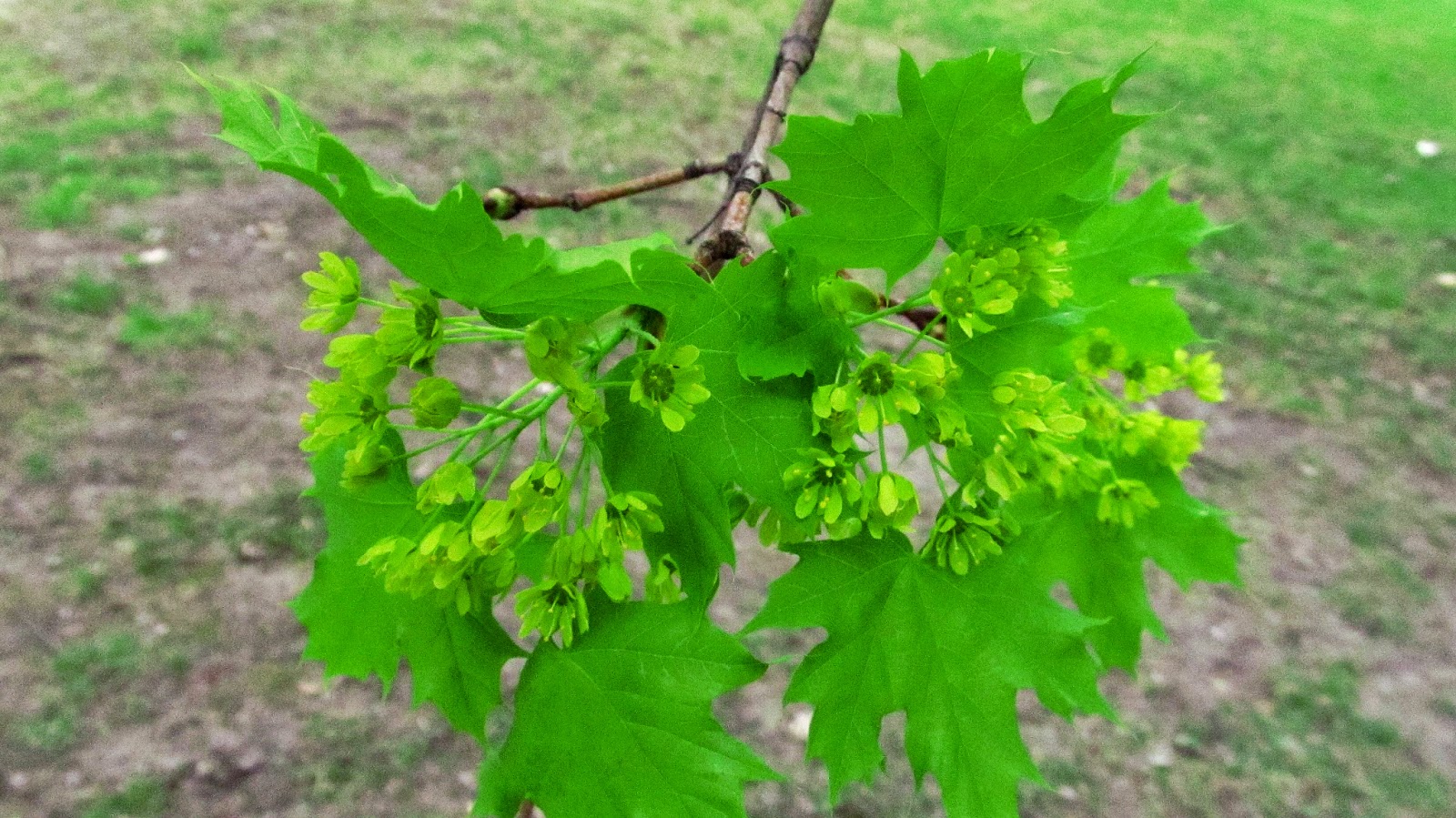
Showing posts with label introduced species. Show all posts

Wednesday, July 20, 2016

Fieldwork fun: Eristalis tenax and pollinator diversity

The field season is on in earnest now. Yesterday I was surveying blooming plant species at my field site, taking photos of the blooming plants as informal vouchers for now (vouchers = samples to prove that I correctly ID'd the plant, often collected specimens deposited at an herbarium in my field), and I managed to snap this awesome shot:

Eristalis tenax on Achillea millefolium
This guy is rather interesting, and not just because close-up shots of insects are cool by default.

I am pretty sure this is Eristalis tenax (a.k.a drone fly), and positive that it is a syrphid fly (a.k.a. hoverflies or bee flies). Syrphid flies are a group of flies which are bee or wasp mimics, meaning that they have characteristics resembling those of bees or wasps, which in theory is an antipredator adaptation conferring the advantages of the mimicked species against particular predators. E. tenax, our awesome, rather big (13-15mm wingspan [1]) syrphid fly is native to Eurasia [1] and was introduced to North America [1] before 1874 [1]. It is now widespread in North America [1,2].

The larval stage of this species is rather unappealing (called a rat-tailed maggot) and can pose problems particularly at agricultural sites, where they can become overabundant in ponds and livestock areas [3]. There have been cases of accidental ingestion of the eggs/larvae and subsequent myiasis (infestation by flies) of humans, causing unpleasant illness etc., but apparently the myiasis is treatable [3].

E. tenax is a pollinator, as adults feed on nectar [3] and so can be pollen vectors. indeed, although we tend to think of bees when we talk about pollinators, there are many other types of pollinator: flies, syrphid flies, butterflies, moths, skippers, wasps, birds, bats... There is even one documented case (research article) I am aware of where a lizard was demonstrated to be a pollinator!

I went digging around in the literature about E. tenax and found a study which compared the efficiency (transfer of pollen per visit) and effectiveness (number of visits per unit time) of E. tenax (and several other non-managed species) at pollination of Brassica rapa var. chinensis (pak choi) [link to open-access article]. The researchers conclude that E. tenax is equally effective and efficient as A. mellifera (European honeybee, a managed pollinator of considerable economic importance which is used extensively globally as a crop pollinator) on an individual basis as a pollinator, but due to much lower numbers of individuals in the populations of this and other alternative pollinators, A. mellifera remained the most important effective pollinator.

Just for fun, here's another syrphid fly I've photographed before. I think it's Toxomerus marginatus, but I'm not positive on the I.D. I am fairly sure it's at least in the genus Toxomerus, but I may be wrong about the species.

Toxomerus marginatus (?) on Rudbeckia hirta

Thursday, August 6, 2015

The Root of Invasives: Burdock - Arctium lappa - Bardane

One visually arresting plant that you will be more likely to find in disturbed environments (eg parks, cities, agricultural areas, roadsides) is burdock. This plant is an introduced invasive plant originally native to Europe and Asia [1], and has been introduced, likely as a garden plant.

Arctium lappa whole plant view
Arctium lappa (greater burdock) is a particularly striking plant, rising to an impressive top height of 2.7m or even 3m [1,2]; its lower leaves can grow to enormous sizes, and its large purple flowerheads on tall stalks make the plant almost impossible to miss.

Arctium lappa inflorescence
A. lappa is broadly distributed in the US and Canada (US range map here, Canada range map here). Though introduced, it has no special status in the US [3], but is listed as a noxious weed in several provinces [4], including Alberta [5], British Columbia [6], and Manitoba [7]. This is likely because it can spread very aggressively in nitrogen-rich soils (eg agricultural areas) [1], because it can cause skin irritation and rash on contact [8], and the fine hairs on the seeds can be dangerous if inhaled [8], and because there is some evidence that the plant may be toxic to some mammals [9].

Arctium lappa inflorescence
This plant is very well known for its edible root. The root of A. lappa used to be fairly commonly consumed by humans from Europe to Asia but currently is only common in Asian cooking (especially Japanese) [1]. The root is edible, best harvested in the fall of the first year of growth (burdock is biennial) [1]. It is mild and crisp. The young leaves and shoots are also edible, generally cooked as a pot herb or in salads [1,10].

A. lappa is a frequent staple of traditional Chinese medicine [1], but there is currently insufficient evidence for its use to treat a broad assortment of ailments [11]. Its use is specifically contraindicated for diabetics and pregnant women [10].

Arctium lappa inflorescence covered with bees
A. lappa seems to be quite popular with Bombus spp (various bumblebee species), as it was actually a challenge to get photos of it without bees.

Sunday, June 28, 2015

Oxeye Daisy - Leucanthemum vulgare - Margueritte

This is perhaps one of the most-recognized flowers around (though there are quite a lot of flowers that go by the common name 'daisy'). Leucanthemum vulgare is native to Europe & Asia [1,2,3] and was introduced to North America in the 1800s as an ornamental plant [2,3]. I have very briefly posted about this plant before.

Leucanthemum vulgare inflorescence
Since its introduction, Leucanthemum vulgare has spread over most of North America (US range map here, Canada range map here). Although it is pretty, this species is listed as an invasive species in the US [4], and classified as a noxious weed both federally and in most provinces where it is found in Canada [5]. In Canada, the noxious weed classification indicates that the plant is invasive and disruptive of native plants and ecosystems on a large scale. I do not recommend this plant to gardeners.

Clump of Leucanthemum vulgare
Some parts of this plant are edible [3,6]; I have eaten the young leaves before and they are rather spicy/carroty.

Leucanthemum vulgare inflorescence
This species is pollinated by bees, flies, beetles, wasps, and butterflies [2].

Friday, June 26, 2015

Crownvetch - Securigera varia - Coronille variée

Today we have yet another introduced species in the family Fabaceae (legume family), this time introduced not as a fodder crop or an ornamental, but for ecosystem management: Securigera varia (aka Coronilla varia, crownvetch) has been introduced to North America primarily as an erosion control plant [1,2,3,4,5,6]. Securigera varia is suitable for this purpose because it spreads rapidly (both through seeding and through vegetative propagation by root spreading) and forms a dense root system [1,2,3,5]. Like many members of the Fabaceae, Securigera varia is a nitrogen-fixing plant [2,4,5,6].

Securigera varia inflorescence
Since its introduction to North America in the 1950s, Securigera varia has spread across much of the continent (US range map here, Canada range map here). Unfortunately, those traits which make Securigera varia a suitable erosion control plant can also make it a problematic invasive plant [1,2,3,5,6]. This plant will tend to squeeze out other plants, disrupting ecosystem functioning [1,2,3,4,5,6].

Securigera varia foliage resembles that of Vicia cracca (cow vetch):

Securigera varia foliage

Thursday, June 25, 2015

Bird's-Foot Trefoil - Lotus corniculatus - Pied de poule

Today, I continue in my recent theme of posting about Fabaceae (legumes) introduced to North America as forage plants (see: Galega orientalis (fodder galega)Medicago sativa (alfalfa)Trifolium pratense (red clover). This time, I'm going to talk about Lotus corniculatus (bird's-foot trefoil).

Lotus corniculatus inflorescence
This species is native to Europe, Asia, and Africa [1], and has been introduced to most of North America (US range map here, Canada range map here), primarily as fodder (livestock animal feed). It is a member of the family Fabaceae (legumes) and, like most members of this family, is both a good feed plant and a nitrogen-fixing plant [1,2,3] (nitrogen fixing: removes nitrogen from the atmosphere and puts it into the soil). This plant can become invasive and choke out native plants in some places, especially grasslands [1,2,4].

Dense patch of Lotus corniculatus
Unlike many Fabaceae used for fodder (including Medicago sativa and Galega orientalis), Lotus corniculatus doesn't cause bloat in cattle and so is a desirable fodder crop [1,2].

Lotus conriculatus inflorescence
This plant reproduces primarily through its roots [1], can occasionally self-pollinate [5], but is mostly pollinated by large bees [5], which must be strong enough to pull apart the flowers to access pollen and nectar [5]. Lotus corniculatus produces large amounts of nectar and so is a desirable honey crop [5].

Monday, June 15, 2015

Introduced Species: Snails - Cepaea spp.

So I've noticed one thing about Montreal's fauna that's quite different from the upper Gatineau: extremely abundant relatively large snails. They are Cepaea hortensis (white-lipped snail) and Cepaea nemoralis (grove snail).

Cepaea hortensis - notice that the shell margin at the lip of the shell is pale
Both species are native to Europe and have been introduced in North America. I have found their abundance here in Montreal quite striking, as until coming here I had never seen snails of this size anywhere I had been in Quebec or Ontario.

Cepaea hortensis
Like most gastropods, this species are both hermaphrodites (but still have to mate with others to produce viable eggs). They are also among the species which produce a "love dart" -- essentially a sperm-filled spike that is shot into the body of another snail during mating. This dart actually does pierce the body of the other snail. Violent! ... Reproduction can be a very strange process indeed.

Distinguishing the two closely-related species without dissecting them is not 100% accurate -- while generally Cepaea hortensis has a white or yellow lip to its shell and Cepaea nemoralis has a brown lip, this isn't a perfect correspondence, so it is possible (but unlikely) that these individuals are misidentified.

Cepeaea nemoralis - notice that the shell margin at the lip (opening) is brown
Aside from the lip colour difference, both species show quite a lot of shell pattern polymorphism, varying in base shade from a pale creamy colour to a richer yellow, and having a variable number of brown stripes.

Thursday, June 4, 2015

Introduced species: Silene spp.

One rather distinctive-looking species that many people are likely to come across, even in cities, is Silene vugaris (bladder campion). This introduced species is native to Europe and now distributed across Canada and the US (US range map here, Canadian range map here).

Silene vulgaris - male flowers
I have posted the above photo before (quite some time ago now), but I'm posting it again because it really does show clearly what it is that is visually attractive about this plant (also, I have since developed some basic image enhancement skills and can increase contrast and sharpen images to improve their informative value, so this version is a bit better), which was introduced in North America for its ornamental value [1].

Silene vulgaris - whole plant
This plant is not known to prosper in wild native environments but is reasonably common in modified habitats [1]. It is listed as a noxious weed in both the US [2] and Canada [3].

Silene vulgaris - foliage
S. vulgaris has some interesting reproductive characteristics; it appears in many forms; the flowers can be male (such as the ones pictured in the first image, which only have stamens), others are female, eg the one below with only pistils, and some are hermaphrodites with both male and female parts and function (I don't have any photos of a hermaphrodite flower) [4].

Silene vulgaris - female flower
Another plant from this genus which is also introduced is Silene latifolia (white campion). It is also widely introduced in North America (US range map here, Canadian range map here). Like its close relative S. vulgaris, S. latifolia is listed as a noxious weed in both the US [5] and Canada [6].

Silene latifolia - whole plant
The foliage of S. latifolia resembles S. vulgaris, but is generally broader and larger.

Silene latifolia - flower - note the comparative lack of detail/subtlety in the veination of the bulbous section
Flowers in this species are unisexual (either male or female) [7]. All of the S. latifolia flowers pictured here are female.

Silene latifolia

Wednesday, June 3, 2015

Introduced Species: Greater Celandine - Chelidonium majus - Grande éclaire

At the moment if you take a walk into the wooded portion of the Notre-Dame-des-Neiges Cemetery, you will see an abundantly growing, attractive yellow flower in much of the forest understory.

You might be tempted to conclude that it is the native Stylophorum diphyllum (wood poppy), which has similar leaves and flower. You would unfortunately be incorrect. This is actually the introduced species Chelidonium majus (greater celandine), which resembles Stylophorum diphyllum primarily because they are both members of the family Papaveraceae (poppy family). The native variety, however, has much larger flowers, its leaves are more deeply incurved, and its seed pods are round and hairy rather than the long and slender ones we see in this species.


Chelidonium majus population in bloom
This species is a member of the Papaveraceae (poppy family), so produces the latex-filled sap that is characteristic of this family. Given that, if you're sensitive to such things I would not recommend walking through a population of these in shorts.

Chelidonium majus
So if it's introduced, where is it originally from? Well, this species is native, as many of our introduce species, to Europe [1]. It is now distributed quite broadly across the US (range map here) and Canada (range map here). This species is considered invasive in some parts of the US [2] and is notably good at spreading and naturalizing [3].

Chelidonium majus seed pods
If you are having difficulty determining whether the plant you're looking at is Chelidonium majus or Stylophorum diphyllum, just look for the seed pods, which are very different in the two species. Above I have included a photo of the elongated seed pod of Chelidonium majus.


So why was it introduced here? This plant was originally brought over for medicinal purposes, used for a whole range of illnesses and problems including stomach ailments, warts, and menstrual problems [4]. Note, however, that there is not much evidence for its use in these capacities: it is possibly effective (some limited evidence) for stomach upset, and there is insufficient evidence for the remaining claims [4].

Friday, May 15, 2015

Ornamentals Bonanza

I don't only photograph native plants or plants that I know a lot about. Sometimes I just like to take photos of some pretty ornamentals. So I've decided to create a dedicated post for some of the photos I've taken of some local ornamentals in bloom.

Forsythia sp.
First up, we have some Forsythia sp. bushes. This is a very popular ornamental shrub, introduced in North America; most species are from Asia but one is from Europe and I don't know how to tell which species I'm dealing with. Forsythia sp. are members of the Oleaceae (olive family), and display some of the distinctive characteristics thereof: highly numerous, heavily scented flowers (the scent of the shrub was hard to describe -- not sweet, but strong); they are mostly woody plants; they have a number of floral characteristics that can be read about on the wikipedia page for Oleaceae.
Forsythia sp.
Forsythia sp.'s ornamental appeal is of course in the dense floral display in early spring. The shrub blooms rather riotously before the formation of the leaves.

Glechoma hederacea
Next up, a tiny plant I have seen in the cemeteries, which I believe to be tiny possibly as a result of regular mowing. It generally fits the description of Glechoma hederacea (ground ivy & many other names). If anybody knows different, I would be happy to hear from you! 

Glechoma hederacea
G. hederacea is a member of the Lamiaceae (mint family) native to Europe and transported to North America by European settlers. It is considered naturalized here and identified as a weed in many places. Note that it is not listed on the CWF website for invasive species in Canada.

Malus sp.
And of course the Malus spp. (crab apples) are hard to miss, blooming in great profusion right now. They are very dramatic and wonderfully scented.

Malus sp.
There is a fair amount of variation in the flower colour for Malus sp., and a huge variety of them are found in the Mont-Royal Cemetery, including this dark pink type:

Malus sp. dark pink variety
There were also quite a few lighter pink varieties like the ones below:

Malus sp. lighter pink variety

Malus sp. lighter pink variety
There also were some individuals, unfortunately too tall, which appeared to have red-tinted leaves as well as very dark reddish flowers, and many other variations besides. I don't know how much of the variation is attributable to species vs individual difference.

Malus spp. are native to the northern hemisphere, but I cannot identify each species enough to determine whether it's native to the Montreal region or not. They are members of the Rosaceae (rose family) and exhibit some of the distinctive characteristics of this family: radial symmetry of flowers, 5 petals, 5 sepals, spiral arrangement of stamens. This family's members are often very showy. It is also an economically important family, counting among its members the majority of pit fruit (eg apples, pears, cherries, peaches, plums, apricots) and many nuts (eg almonds).

Syringa vulgaris
And of course, the Syringa vulgaris (common lilac) have started to bloom. This species, like Malus spp, is very hard to miss due to its showy floral display and wonderful scent.

S. vulgaris inflorescence
This species is native to the Balkan Peninsula and has been introduced all over the world as an ornamental. In North America it is considered an introduced but non-invasive species, as it does not spread excessively or overtake native plants. When it is found in the wild, it is usually on former sites of human habitation where it was deliberately planted.

S. vulgaris
Like Forsythia spp, S. vulgaris is a member of the Oleaceae (olive family) and exhibits some of the family's distinctive traits, including the heavy scent, numerous flowers, woody structure, and common floral characteristics.

I don't bother to pick these anymore, but sometimes I take photos just so that I can prove that I've still got it. I seem to have particularly good pattern recognition software in my brain, because I have always been able to spot 4-leaf clovers at a glance. Here's a photo of one I noticed on one of my walks:

Four-leaf clover - clearly the victim of some insect predation
I believe that my ability comes from simple exposure; I spent an enormous amount of my time as a child foraging, and just wandering in the woods with my forester/naturalist father who would happily tell me what I was looking at. The ability is much broader than simple 4-leaf clover spotting; it extends to identifying and classifying all sorts of plants, spotting unassuming/subtle/camouflaged plants and animals, and to spotting illness/damage/infection/infestation in plants, and so comes in very handy for me in the field.

It has so far been a gorgeous spring.

Wednesday, May 13, 2015

Norway Maple - Acer platanoides - Érable plane

This maple has been blooming vigorously in Montreal for a little over a week now, no surprise as it is an early bloomer.

A. platanoides
Though it looks similar to the native Acer saccharum (sugar maple), this species is an introduced ornamental which is extremely popular in cities for its tolerance to a wide variety of environmental conditions [1]. The species is native to eastern and central Europe [2], but is naturalized in parts of North America particularly the northeastern US [1,3]. Exact distribution maps for this species are unfortunately not available at present; due to its popularity as an ornamental and its potential to spread into wild habitats as a result of its introduction in lanscaped areas, it is not presently known exactly how widely distributed the species is [4]. At any rate, it is classed as an invasive species in the US [1,2,3,4] and Canada [1,2,4]

A. platanoides flowers
A. platanoides ornamental varieties with red leaves such as the popular Crimson King cultivar [5] have been bred as well and are very popular.

A. platanoidies, cultivar Crimson King
This species' invasiveness is cause for some concern, particularly as it inhibits understory plants beneath it [1,3,4] and could not only crowd out native maple species such as the economically important A. saccharum (sugar maple, the source of maple syrup), but also other native trees such as beech [1,3,4]. There is the possibility that an observed reduction in understory diversity below A. platanoides could also result in loss of understory herbs and shrubs, but at present there isn't any data to back the idea up [4].

A. platanoides, cultivar Crimson King : flowers
This is an animal-pollinated species[1,4], visited by Bombus spp. and Andrena spp. [1]. That it is animal-pollinated rather than wind-pollinated shows in the structure of its flowers. Note the presence of sepals, petals, stamens, and pistils -- these are 'perfect' or 'complete' flowers, bearing all of the basic characteristics of a standard animal-pollinated flower (note that they are also monoecious, as indicated by the presence of both male -- stamen -- and female -- pistil -- parts on the same flower and tree) :

Complete flowers on A. platanoides - note that though the pistil is small, it is present
The pistil is a bit more visible in the flowers of the cultivar Crimson King. It's the red part in the centre:

Complete flower on A. platanoides, cultivar Crimson King
The simplest method for an amateur to distinguish between A. platanoides and A. saccharum is to break one of the leaves from the stem and squeeze a bit; if the sap is clear, it's A. saccharum, whereas if the sap is milky, it's A. platanoides [1,3,5].

Friday, July 19, 2013

St John's Wort - Hypericum Perforatum - Millepertuis Perforé

St John's wort, hypericum perforatum (fr: millepertuis perforé) is another introduced species which now flourishes at the lake. It is a fairly well-known herbal antidepressant. It's worth noting here that herbal antidepressant just means it contains neurotransmitter reuptake inhibitors and it's an herb, not that plants are magical and better than proper pharmaceuticals. Dosage is inexact with herbs (as opposed to pill-form SSRIs, which have dosage controlled) so I wouldn't recommend that everybody go running out to make St John's wort tinctures. At least in Canada, measured doses of St John's wort extract are available over the counter anyway, so if you want to try it go try that. Disclaimer: talk to your doctor, St John's wort interacts with a number of common medications (eg oral contraceptives) in ways that can be extremely bad for you. Self-medication is dangerous, talk to your doctor or pharmacist about this option.

H. perforatum inflorescence
This flower isn't always easy to spot; it tends to grow close to goldenrod at the lake, and the two have a very similar colour while goldenrod is generally taller, making it a tough spot at the lake. The plant itself is very easy to identify, however; I've never seen anything else that looks like it growing at the lake, so if it looks like this it's probably St John's wort.

H. perforatum inflorescence up close
I love the form of the filaments & anthers on this flower. It's like a koosh ball cut in half. It's a very wibbly (I swear that's a word) sort of flower. Pretty and delicate, with the perfect rich golden colour that I'm glad has come out here very well. It's not a very large flower, at least at the lake; usually 1-2 cm across.

I'm making big changes to my life right now. My anthem right now is Chris Hadfield's rendition of Space Oddity because to me this is an incredible symbol of the triumph of the human spirit and human innovation. Decades ago, this song was sung looking up at the stars from Earth; now Chris Hadfield has sung it back to Earth from the stars. That's so incredible I have a hard time believing it sometimes. Also, I've never gotten over the childhood hero-worship I had for astronauts. Astronauts are incredible people; if my eyes didn't suck I would have tried to become one myself (but you need to be not totally useless in an emergency if you can't find your glasses, and my eyes suck without some form of intervention; I discovered the hard truth at 12 years old and I still wish I were eligible for laser eye surgery). Anyway, this song makes me think of just how incredible humanity can be. Steels the guts for hard work.